
Small and Often: How Your Dog Learns
Why bite-sized training sessions can help you build skills, confidence and connection.
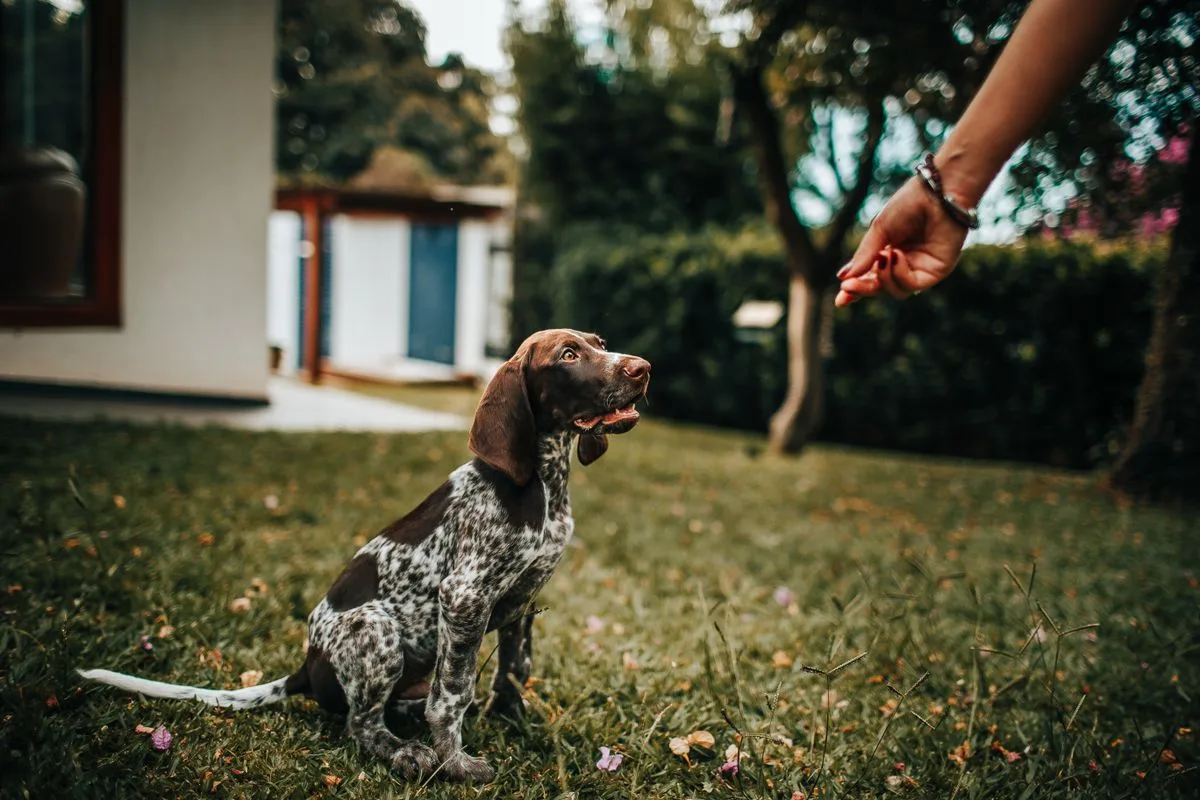
You don’t need to set aside an hour to train your dog.
A few achievable repetitions while the kettle boils, before a walk or during a quiet moment can be useful opportunities to learn.
Small, frequent sessions give you time to focus on one skill, reward progress and finish before the exercise becomes tiring or frustrating.
Your dog learns from what happens next
Imagine your dog touches your offered hand with their nose. You mark that moment and give them a reward.
With repetition, your dog can begin to connect their action with its outcome: touching your hand makes something enjoyable happen.
When that consequence makes the behaviour more likely in the future, you are using positive reinforcement.
The timing matters. A familiar marker helps identify the behaviour you are rewarding, followed promptly by something your dog values.
A small action. A clear response. A worthwhile reward. Another opportunity to try.
That is the learning loop we want to build.
Break the skill into achievable pieces
What looks like one simple task to us may involve several learning steps for our dogs.
Settling on a mat, for example, might begin with approaching it, then stepping onto it, remaining there and eventually lying down comfortably.
Reward those early steps. If we wait for the finished behaviour before rewarding anything, we may miss opportunities to help our dogs understand.
Once a step becomes easy, make a small change. Ask for a little more duration, practise in a slightly different place or introduce a mild distraction—one change at a time.
Small and often keeps the conversation clear
Long sessions can become repetitive. We may lose our timing, ask for too much or miss signs that our dogs need a break.
Short sessions make it easier to stay observant.
There is no perfect session length for every dog or exercise. Start with a few repetitions, then pause. Watch whether your dog remains comfortable and interested.
Sniffing, play and rest can happen between training moments. Those breaks are part of the experience.
Help your dog become an active learner
“Teaching your dog how to learn” means building familiarity with the process.
Your dog gets opportunities to try an action, receive clear feedback and discover what works. You learn to notice small progress and adjust the task when needed.
Over time, this can help your dog participate more confidently in training.
If they seem confused, make the next step easier. Repeating a cue louder or more often rarely makes its meaning clearer.
Try a bite-sized session
Training also happens outside planned sessions. Notice and reward everyday choices you appreciate: a check-in, a loose lead or choosing to settle.
Small steps, repeated often, give learning room to grow.
At Norse Paw, we help you turn everyday moments into achievable learning through positive reinforcement, choice and connection.
Photo: Helena Lopes / Pexels.