When Your Dog Won’t Take Treats: What Else Can You Use?
Positive reinforcement starts with discovering what your dog finds rewarding.
You have your treats ready, but your dog turns away.
Does that mean positive reinforcement won’t work?
Absolutely not. Food is a useful training tool, but positive reinforcement can also involve play, sniffing, exploring and other experiences your dog enjoys.
The starting point is understanding why your dog isn’t interested—and what they need in that moment.
First, pause and observe
A dog refusing food may be full, dislike the treats or be distracted. They may also be worried, uncomfortable or finding the environment overwhelming.
Compare the situation with what is normal for your dog. Do they happily eat these treats at home but refuse them near other dogs? Are they able to explore comfortably, or are they tense and constantly scanning?
Before changing rewards, try making the situation easier. Move further from distractions, find somewhere quieter or take a break.
If your dog suddenly loses interest in food across everyday situations, particularly alongside other changes, contact your vet.
What makes something a reward?
We choose what to offer, but our dogs determine whether it is rewarding.
A treat, toy or activity acts as reinforcement when it follows a behaviour and makes that behaviour more likely in the future.
That means praise isn’t automatically a reward. Neither is stroking: some dogs enjoy touch in one setting and prefer space in another.
Watch what your dog chooses and whether the behaviour you reward becomes easier or more frequent over time.
Using toys as rewards
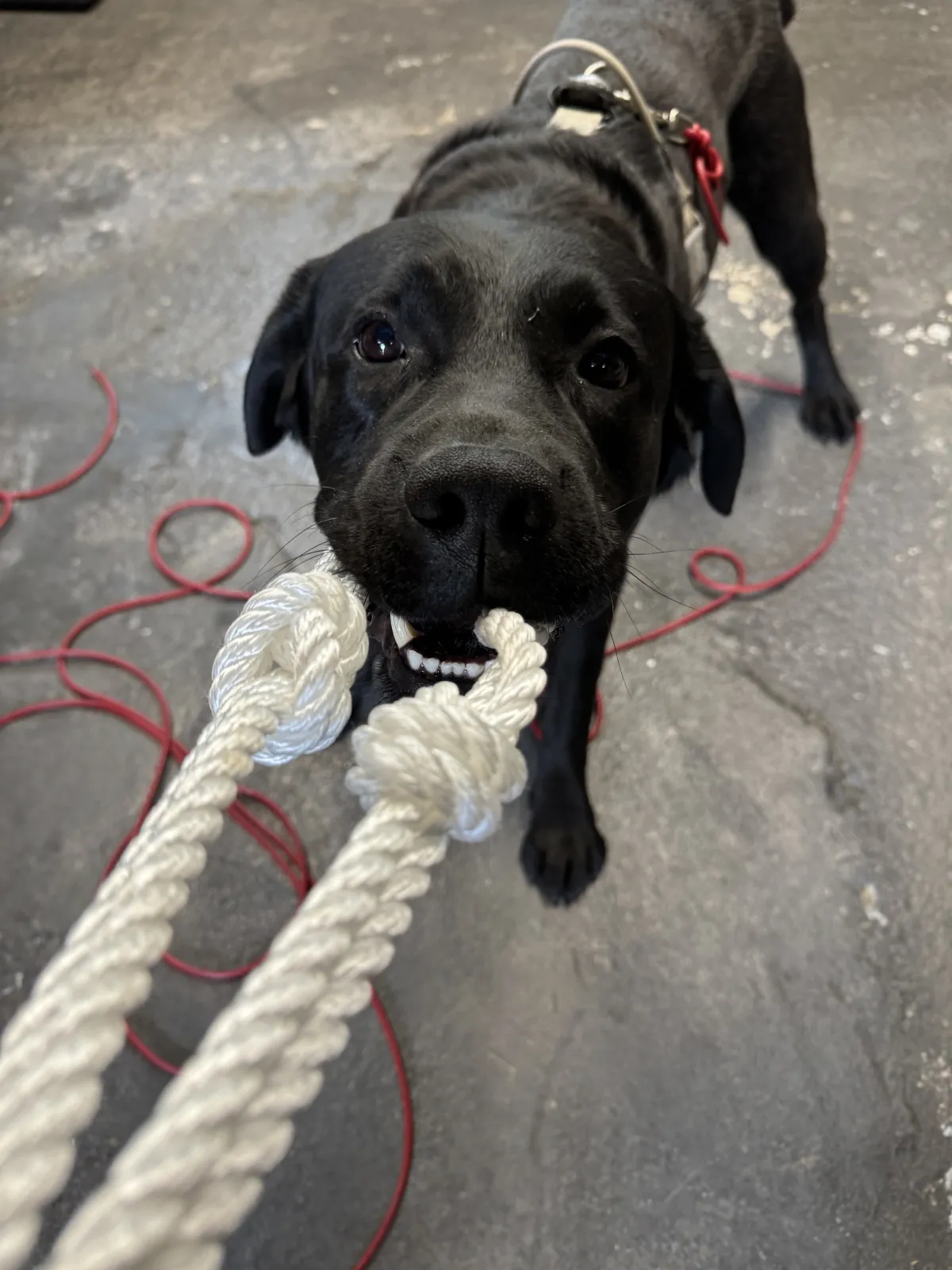
For a dog who enjoys play, a short game can be a powerful reward.
Start with a toy they already like and a behaviour they know well. For example, when your dog touches your offered hand, use your familiar marker and immediately begin a brief game of tug.
Let the game feel rewarding to your dog. Use comfortable movements, allow them to win and avoid pulling them upwards or lifting them by the toy.
Practise releasing and restarting the game separately, using exchanges and rewards rather than taking the toy by force.
Play can increase excitement. If your dog finds it harder to respond afterwards, shorten the game or choose a quieter reward.
Everyday activities can be rewards, too
Think about what your dog wants to do during the day.
- Sniffing: reward a few loose lead steps by inviting them to investigate a scent.
- Exploring: reward a check-in by moving together towards an interesting, safe area.
- Chasing a toy: reward a recall with a short toss in a secure space.
- Social interaction: offer a brief game, praise or touch when your dog actively enjoys it.
Access to an activity should suit the situation. Avoid asking your dog to perform before meeting essential needs such as drinking, toileting or moving away from something frightening.
Try a reward discovery session
Food remains useful, and you don’t need to abandon it. Build a range of rewards so you can choose what works for your dog and the moment.
The best reward is something your dog values—not simply something we offer.
At Norse Paw, we help you discover what motivates your dog and use it to build skills through positive reinforcement, choice and connection.