
Why Dogs Need Sleep: Rest Is Part of Training
What canine research tells us about sleep, learning and behaviour—and how to give your dog better opportunities to rest.
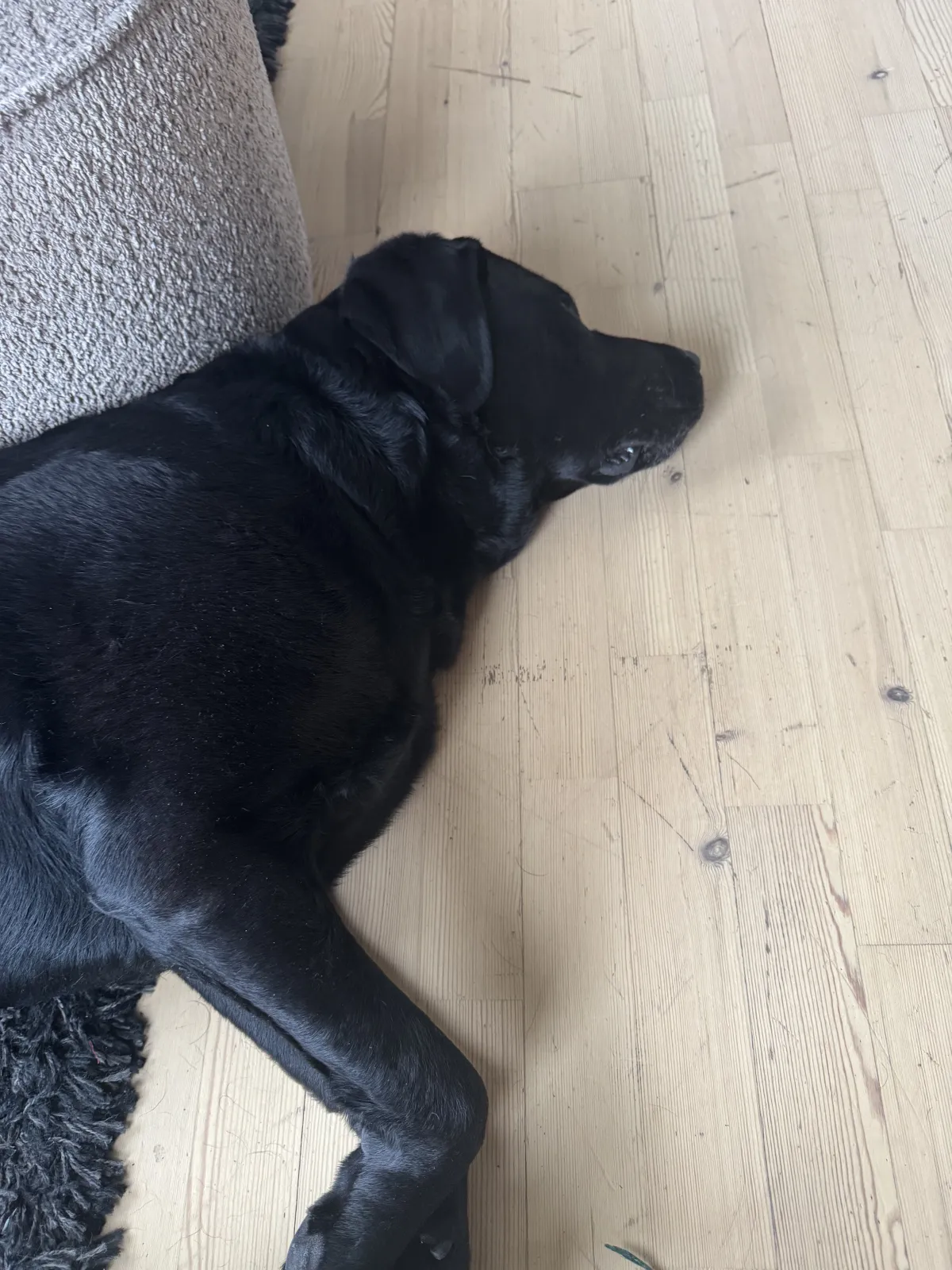
When our dogs struggle to settle, it is tempting to add another walk, another game or another training session.
Sometimes they need activity. But before adding more, ask another question: Is my dog getting enough opportunity to sleep undisturbed?
Sleep is a need in its own right. Research in dogs links it with learning, daytime behaviour and emotional experiences. A well-planned day makes room for movement, exploration, connection—and sleep.
Learning doesn't finish when training stops
In a 2017 study, Kis and colleagues taught dogs unfamiliar verbal cues for familiar actions, then recorded their sleep using non-invasive brain monitoring. Performance improved after sleep, and aspects of sleeping brain activity were associated with the improvement. [1]
This provides evidence for a relationship between sleep and memory consolidation: the processes that help learning become more lasting. It does not mean a nap will automatically fix a difficult skill or replace good teaching.
The practical takeaway is to leave room for rest after learning, rather than filling every available moment with another task.
Give your dog opportunities to practise—and opportunities to sleep.
What happens when sleep is disrupted?
In a 2022 observational study, Schork and colleagues analysed 1,560 hours of recordings from kennelled laboratory dogs. Shorter or more fragmented sleep was linked with changes in daytime behaviour, including more inactivity and less play and alert behaviour. [2]
This is a useful reminder that an inactive dog is not necessarily a well-rested dog. Lying awake and watching the room is different from sleeping.
The study was conducted in laboratory kennels, not family homes. It also did not experimentally deprive dogs of sleep, so the findings cannot establish that sleep loss alone caused the changes.
Sleep and behaviour difficulties are connected
Tooley and Heath's 2022 questionnaire study covered 1,330 dogs. Dogs who were more easily disturbed from sleep during their caregivers' waking hours had higher reported severity of problem behaviours. Night-time sleep duration also showed a relationship with reported difficulties. [3]
Because caregivers reported both sleep and behaviour, the study cannot tell us which came first. Worry or discomfort might disrupt sleep; poor sleep might contribute to difficulty coping; both may be involved.
It did not establish an ideal sleep duration for every dog. Its night-time findings should not be turned into a daily sleep target—or a reason to wake a dog who sleeps longer.
For training, the useful message is to include sleep in the picture, rather than assuming every difficulty needs more exercise or obedience practice.
Emotional experiences can affect sleep, too
Another 2017 experiment by Kis and colleagues studied 16 pet dogs after positive and negative social experiences. The experiences changed how quickly dogs fell asleep and the distribution of their sleep stages. Dogs fell asleep sooner after the negative condition. [4]
That does not show that stressful experiences improve rest. It shows that falling asleep quickly is not, by itself, proof of a positive experience or better-quality sleep.
Sleep and emotional experience are connected. The goal should be a comfortable daily routine, not exhaustion.
How much sleep does my dog need?
The studies here do not establish one ideal number for all dogs. Age, health, daily activity and environment matter. Dogs also sleep in several periods across the day and night. [2,3]
Look beyond a total on the clock. Can your dog settle somewhere comfortable? Are naps repeatedly interrupted? Has their usual pattern changed?
A sleep diary is an observation tool, not a diagnosis. Sudden changes, persistent restlessness or difficulty getting comfortable deserve a conversation with your vet.
Make room for better rest
Here is a practical starting plan:
- Offer a comfortable choice of resting places. Include somewhere away from busy walkways, doors and household activity.
- Protect sleep from interruptions. Ask family and visitors to leave sleeping dogs undisturbed; supervise children and other animals.
- Balance activity with downtime. Keep suitable walks, sniffing, play and short training sessions, while leaving genuine opportunities to rest.
- Notice what prevents settling. Record interruptions, noise, visitor activity or apparent discomfort rather than assuming your dog needs tiring out.
- Keep a simple diary for several days. Note apparent sleep, awake resting, interruptions and behaviour. You cannot identify sleep stages just by watching, but patterns may help discussions with your vet or trainer.
These are practical recommendations informed by the research, rather than a treatment protocol tested as a package.
For a dog struggling with reactivity, rest belongs alongside distance management, suitable enrichment and an individual behaviour plan. It is supportive care, not a standalone cure.
Sometimes the next helpful step is to give your dog space to sleep.
At Norse Paw, we help you build everyday skills through positive reinforcement, choice and an understanding of your dog's needs—including rest.
Research referenced
- Kis, A., et al. (2017). The interrelated effect of sleep and learning in dogs (Canis familiaris); an EEG and behavioural study. Scientific Reports, 7, 41873. Read the study.
- Schork, I. G., et al. (2022). The cyclic interaction between daytime behavior and the sleep behavior of laboratory dogs. Scientific Reports, 12, 478. Read the study.
- Tooley, C., & Heath, S. E. (2022). Sleep Characteristics in Dogs; Effect on Caregiver-Reported Problem Behaviours. Animals, 12(14), 1753. Read the study.
- Kis, A., et al. (2017). Sleep macrostructure is modulated by positive and negative social experience in adult pet dogs. Proceedings of the Royal Society B, 284, 20171883. Read the study.